Shephelah ("low lands" -- pronounced "Sh - fay' - lah'). On Sunday, 10/9/11, we learned how and why Israel battled with Philistines in southern Israel. Some Israelite lowland cities close to the brownish highlands below (like Zorah, Beit Shemesh, Azekah, Mareshah & Lachish) were fortress strongholds to guard a network of valleys in their low hills (the "Shephelah") from invaders coming from the west based in Philistine cities like Lod, Gezer, Ekron and Gath.


 This sketch of a hand shows how major cities in the Judean highlands (like Jerusalem, bottom knuckle) were protected from coastal plains invaders (finger tip): by guarding 5 access valleys (between the fingers) with strong fortress cities (middle knuckle). We visited some of these valleys & strategic cities. When the people forgot to obey the Lord, he "left those nations, without driving them out," in order to "prove Israel, whether they will keep the way of the Lord" (Judges 2:20-23). Similarly, in the Book of Mormon, the Lord used Lamanites to scourge wayward Nephites.
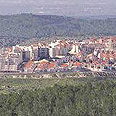
Beit Shemesh (Sorek Valley/Jerusalem, Samson -- Philistines). In Hebrew, this "house of the sun" was an Israelite stronghold that retained the name of a Canaanite goddess. It had the earliest iron workshop & most advanced water system in the country. The modern city (popul. 80K) was founded in 1950.



En route to our next stop, we passed more Shephelah hills & valleys forested with millions of trees, funded over the years through the Jewish National Fund.


Azekah guarded the upper Valley of Elah. We hiked up to have a good look. (Even better than my shots was this aerial view online.)


Assyrians built a stone and dirt ramp to the top of the city wall, enabling soldiers to storm and take the city.

In turn, defenders built a counter-seige ramp to repel the attack.




Mareshah (Guvrin Valley. Hebrew = "authorized deputy." Greek = Marisa). Pronounced Mar - e - shah', this and many other conquered cities were given to Judah (Joshua 15:44). It was rebuilt as a fortress city to guard the nearby valley system -- i.e., the Guvrin Valley leading to Hebron (2 Chr. 11:8, ch. 14). After the Babylonian conquest, the area was occupied by Edomites & Phoenicians.
This site was our greatest surprise. Today there isn't much above ground. But underground was another matter. In the 3rd & 2nd centuries BC, these foreign occupiers built an extensive complex of industrial caves. Under a weathered cap of hard limestone ("nari") 5 - 10' thick, layers of softer chalky limestone ("kirton") was easy to hew -- for bldg. stones and plaster. We entered this underworld.


Sidonian Burial Caves. Beyond these functional caves were some unique 3rd - 2nd century funerary chambers, with gabled crypts -- built by Phoenicians from Sidon (Lebanon). We entered through a thicket opening.


The Bell Caves. These were truly amazing. Much like Carlsbad Caverns (NM), the inauspicious entry belied what lay inside.


Bro. Skinner surmised that the Philistines ("sea people") were Minoans driven from Crete by the Greeks in about 1350 BC. They first attacked but were repulsed by Egypt, then settled in the coastal plains and often harassed Israel. Ironically, both Romans & British later used the name of Palestine for the land of Israel.
 This sketch of a hand shows how major cities in the Judean highlands (like Jerusalem, bottom knuckle) were protected from coastal plains invaders (finger tip): by guarding 5 access valleys (between the fingers) with strong fortress cities (middle knuckle). We visited some of these valleys & strategic cities. When the people forgot to obey the Lord, he "left those nations, without driving them out," in order to "prove Israel, whether they will keep the way of the Lord" (Judges 2:20-23). Similarly, in the Book of Mormon, the Lord used Lamanites to scourge wayward Nephites.
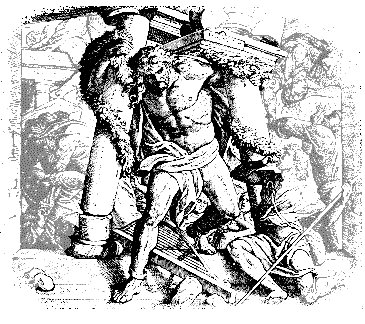
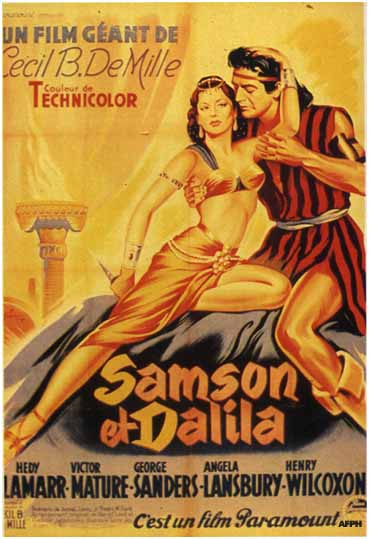
It guarded the Sorek Valley, where Samson was born & ran amok. Šhimšôn, or "man of the sun," was raised as a Nazirite -- consecrated to God by a vow to avoid liquor, dead bodies & cutting his hair. He separately married two Philistine sisters from Timnah (at Sorek Valley's far end) & consorted with another there as prostitute. All betrayed him.

God gave him great strength, to be a judge or "deliverer" of his people. But he broke his vows, resulting in bondage to his enemies. He did not deliver his people but did kill many Philistines by pulling down their temple. (See Judges 13 & 14).
En route to our next stop, we passed more Shephelah hills & valleys forested with millions of trees, funded over the years through the Jewish National Fund.


Azekah (Elah Valley/Bethlehem, David & Goliath -- Philistines). Pronounced Ah - ze - kah', this is where God destroyed a massed Amorite army with hail stones from heaven (Joshua 10:10-11). Today, Tel Azekah is in a national park near a small town bearing that same name.


This is where David slew the giant Goliath (between 7' and 10' tall). In the time of Saul before 1000 BC, Philistine forces gathered past Azekah near Shocoh, with Goliath as their champion (1 Samuel 17). Philistines were camped on the rt. side (nearest Shocoh) and Israel on the left.


Then in this dry wadi, David chose "five smooth stones...and drew near to the Philistine. ... And David put his hand in his bag & took thence a stone and slang it and smote the Philistine in his forehead, that the stone sunk into his forehead, and he fell upon his face to the earth" (1 Samuel 17:45-54).

This is an authentic sling like David would have used.

This account still has relevance to Israelis. All ages come here to relive this history and liken it to their current situation in the world. Many benches & markers here are inscribed with verses of this scriptural account.


Many crops and orchards grow in the fertile Shephelah.


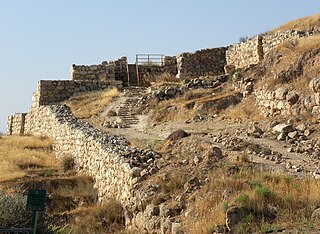
Lachish (Lachish Valley, Sennacherib/Assyria & Nebuchadnezzar/Babylon). Pronounced Lak - ish', this high fortress guarded Jerusalem from attack up the Lachish & Guvrin Valleys. Earlier, it was conquered by Joshua (10:31-33).
In this grove, Drs. Skinner & Harper explained its strategic position.


After Solomon it was Judah's 2nd most important city. In 701 BC during the revolt of king Hezekiah against Assyria, it was captured by Sennacherib (2 Kings 18, 2 Chron 32, Isaiah 36). People were taken captive or brutally killed.

In turn, defenders built a counter-seige ramp to repel the attack.


High city walls and defenses could not prevent the Assyrian slaughter.

The commander's palace was left in ruins.


God smote the Assyrian army before it could beseige Jerusalem and Lachish was rebuilt. But Babylon destroyed it again in 589 BC. Many ostraca (pottery shards used as letters) were found near this gate. One read in part: "We are watching for signals [as instructed] ...but we cannot see Azekah." This proved that Azekah had been taken and that Lachish was doomed.

Only divine intervention against the Assyrians after Lachish saved Jerusalem under King Hezekiah from the same fate in 586 BC (Isaiah 36 & 37).
This site was our greatest surprise. Today there isn't much above ground. But underground was another matter. In the 3rd & 2nd centuries BC, these foreign occupiers built an extensive complex of industrial caves. Under a weathered cap of hard limestone ("nari") 5 - 10' thick, layers of softer chalky limestone ("kirton") was easy to hew -- for bldg. stones and plaster. We entered this underworld.


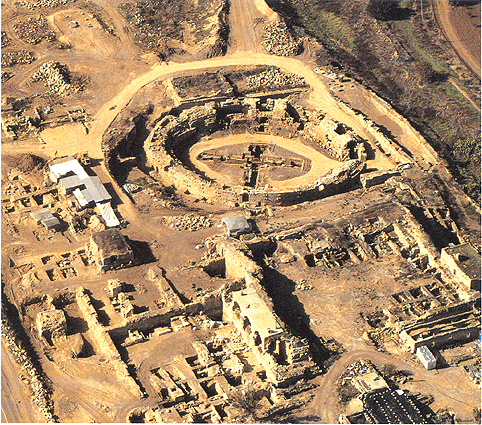
Columbarium caves. This was the country's largest Columbarium -- a cavern for raising pigeons in dovecotes for food, fertilizer and ceremonial sacrifices. It was built (in the shape of a double cross). Later these 2,000 niches were used for storage & cremated ashes.


Caleb C. made a body bridge and tested the wall strength.


Water cisterns. These were dug deeply in the 4th to 3rd centuries BC.


They were part of a complex dug beneath several residential dwellings. This was also an echo chamber for singing hymns like Lead, Kindly Light.


Some houses had individual stairs for easier access to separate cisterns.


We saw many shapes and sizes of underground cavities.


We entered more maze-like caves -- some used for Columbarium niches.


Olive processing plant. These caves were to store & process olives harvested only in the fall. Night & day for several months, they were crushed with these stone wheels & mills, much like ours at the JC.


Then oil was extracted with ancient lever-and-weights presses.

Sidonian Burial Caves. Beyond these functional caves were some unique 3rd - 2nd century funerary chambers, with gabled crypts -- built by Phoenicians from Sidon (Lebanon). We entered through a thicket opening.


One elegant chamber was fit for families of royalty.

Its walls were adorned with artistic paintings & designs, nicely restored.


After the Hasmoneans conquered the country in this period (about 140 - 130 BC), foreign occupiers had to become Jews and much of Maresha was destroyed. Herod the Great (a converted Edomite, born 74 BC) was from this area.


There were about 800 of these Bell Caves, named for their shape.


Some were truly cavernous, ranging from 40 to 80' high -- created in the late Byzantine & early Muslim period (7th to 11th centuries AD)..


Most had openings at the top, for removing the stone. These were kept narrow: To prevent collapse, to minimize hardening of the limestone & to protect workers from harsh above-ground climatic elements.

Blocks of quarried marble & chalk were raised and removed from the caves through these openings, using ropes and pulleys.


Again, students gathered to sing hymns and hear their own echoes. Other visitors seemed to enjoy hearing them sing.


Climbing hundreds of stairs and exploring miles of ancient tunnels & caves was exhausting but gratifying that day.
En route back, we again marveled at the many lush hand-planted forests and modern bldgs. -- almost all done since Israel's Six-day War in 1967.


This is truly a country of contrasts.

No comments:
Post a Comment